
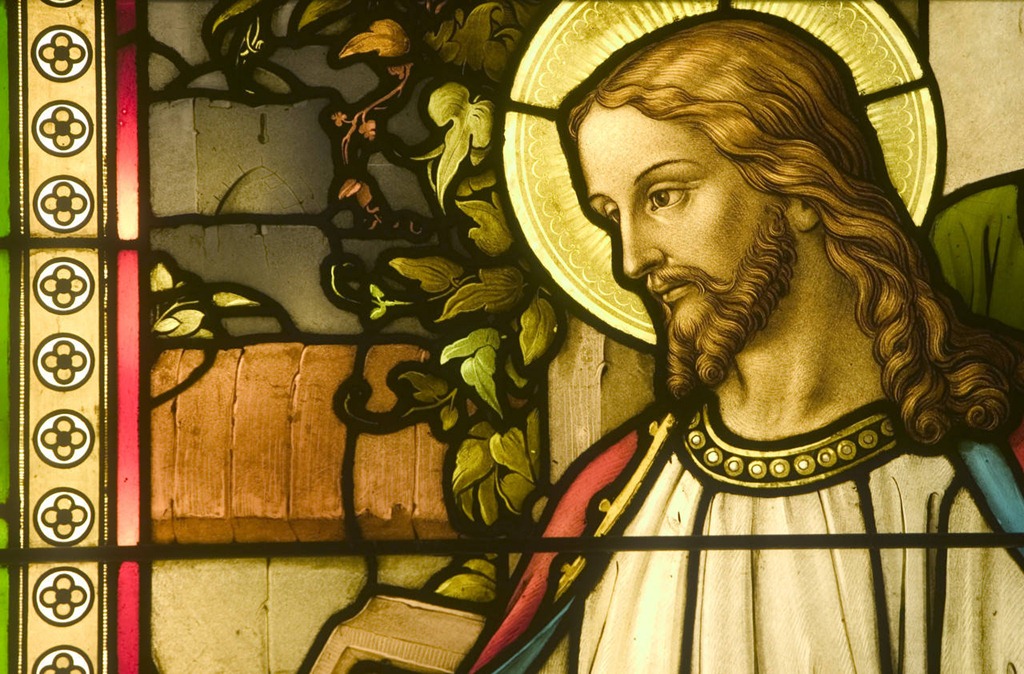
Whereas Christianity is in decline in Europe, in Africa it is still very strong.
Speaking as a rationalist and freethinker who believes he has objectively assessed the available data and has come to the conclusion that:
-
Its hard to take faith-healing seriously anymore.
-
Its hard to take stories of ‘demon-possession’ seriously anymore.
-
Its hard to take pastors seriously anymore.
-
Its hard to take bible-thumping politicians seriously anymore.
-
Its hard to take the Gospels seriously anymore
-
Its hard to take the fear of hell seriously anymore
… I wonder, does Christianity as a worldview still have anything to offer anybody besides the kind of subjective personal validation that one could also derive by subscribing to any number of passions, hobbies, or interests? Further, there exist today many avenues for seeking motivation for life and healthy living that do not require belief in Jesus or even a ‘God’ – and yet there are many for whom this belief is their reason for living on a day to day basis.
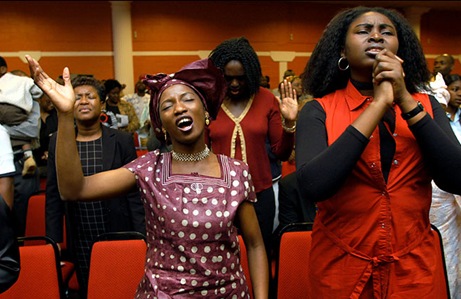
Atheists like myself view this dependency as a crutch.
But is there more to it?
And even if it is a crutch – what’s wrong with that, considering the dire situation the majority of Ugandans live in?
Matthew Parris an atheist, and journalist, wrote the following in his defense of Evangelical Christianity in Africa in the Times:
But travelling in Malawi refreshed another belief, too: one I’ve been trying to banish all my life, but an observation I’ve been unable to avoid since my African childhood. It confounds my ideological beliefs, stubbornly refuses to fit my world view, and has embarrassed my growing belief that there is no God.
Now a confirmed atheist, I’ve become convinced of the enormous contribution that Christian evangelism makes in Africa: sharply distinct from the work of secular NGOs, government projects and international aid efforts. These alone will not do. Education and training alone will not do. In Africa Christianity changes people’s hearts. It brings a spiritual transformation. The rebirth is real. The change is good.
I used to avoid this truth by applauding – as you can – the practical work of mission churches in Africa. It’s a pity, I would say, that salvation is part of the package, but Christians black and white, working in Africa, do heal the sick, do teach people to read and write; and only the severest kind of secularist could see a mission hospital or school and say the world would be better without it. I would allow that if faith was needed to motivate missionaries to help, then, fine: but what counted was the help, not the faith. But this doesn’t fit the facts. Faith does more than support the missionary; transferred to his flock. This is the effect that matters so immensely, and which I cannot help observing.
The hospitals, the schools, the charity work, the encouragement, the world view the belief system of Christianity contributes to Africa – all these are things Parris feels Africa cannot do without at this present time.
He adds:
Anxiety – fear of evil spirits, of ancestors, of nature and the wild, of a tribal hierarchy, of quite everyday things – strikes deep into the whole structure of rural African thought. Every man has his place and, call it fear or respect, a great weight grinds down the individual spirit, stunting curiosity. People won’t take the initiative, won’t take things into their own hands or on their own shoulders.
How can I, as someone with a foot in both camps, explain? When the philosophical tourist moves from one world view to another he finds – at the very moment of passing into the new – that he loses the language to describe the landscape to the old. But let me try an example: the answer given by Sir Edmund Hillary to the question: Why climb the mountain? “Because it’s there,” he said.
To the rural African mind, this is an explanation of why one would not climb the mountain. It’s… well, there. Just there. Why interfere? Nothing to be done about it, or with it. Hillary’s further explanation – that nobody else had climbed it – would stand as a second reason for passivity.
Those who want Africa to walk tall amid 21st-century global competition must not kid themselves that providing the material means or even the knowhow that accompanies what we call development will make the change. A whole belief system must first be supplanted.
And I’m afraid it has to be supplanted by another. Removing Christian evangelism from the African equation may leave the continent at the mercy of a malign fusion of Nike, the witch doctor, the mobile phone and the machete.”
Matthew Parris
It seems to me that Parris is saying Christianity is somehow necessary to fill the philosophical and metaphysical vacuum left by the erosion of traditional beliefs that have previously given Africans a cohesive albeit irrational worldview – because such a vacuum would leave Africans at the mercy of undesirable influences such as those things he mentions (though his selection criteria for those things is not clear).
It would not surprise me if some feel such sentiments to be patronizing in nature. I could see how one might accuse Parris of trying to imply that Africans are currently incapable of handling rationality and reason – and so at present need Christianity to save them from themselves. But even then, rather than infantilise Africans by replacing one crutch with another, why not give them the chance to learn how to walk on their own? The fact that there exists a growing number of atheists on the continent seems to challenge the implication that we are somehow unable to deal with reality without having Christianity as a crutch. Today, many Africans are increasingly looking at the world around them through a rational lens and are coming to the conclusion that one need not subscribe to religion to be moral, and charitable. Many of us have also realised that mysticism is not required as a foundation for a cohesive view of reality.
Norm Allen, the former executive director of African Americans for Humanism, wrote in his response to Parris:
I readily admit that missionaries have done some great work in Africa—building roads, clinics, schools, etc. However, missionaries in recent years have also enriched themselves while exploiting the masses, discouraged millions of Africans from using condoms, thereby increasing unwanted pregnancies and the spread of Aids, promoted sexism, contributed greatly to the persecution and deaths of alleged witches, etc. Indeed, Africa provides the perfect example of what Robert Ingersoll said about the historic role of the Catholic Church: “In one hand she carried the alms dish, in the other, the dagger.” The same could be said of organized religion in general.
In Rwanda, Christians were complicit in the genocide that occurred there in the 1990s. Many people were brutally murdered in churches. In Nigeria, Christians and Muslims have been killing each other by the thousands. Throughout Uganda, Zimbabwe, Nigeria and many other African nations, Bible-based homophobia plays a major role in the persecution, and in some cases, murders, of LGBTs.
What Africa needs is what Ingersoll called “a caring rationalism.” The Bible simply contains too many ultra-reactionary and inhumane messages to be blindly embraced by believers. Christian ideas of tolerance are inconsistent with the biblical notion that acceptance of Christ is the only way to reach heaven. The Prince of Peace said he came to bring not peace, but a sword. It is no wonder that there are so many different conceptions of Christianity, not all of them benign.
A humanistic life-stance is the best way to approach the many divisive religious and ethnic conflicts that plague Africa. Human-centered thought and action offer much more for African uplift than piety and prayers ever could. Christian charity is, indeed, commendable. However our appreciation of the missionaries’ alms dish must never blind us to the dagger that so often accompanies it.
What do YOU think? Are you a believer? Then you probably disagree with atheists on this. Perhaps to you Christianity is real and is indeed the only path to one’s salvation – relevant today as it was 2,000 years ago.
This Freethinkers’ Night we are asking – Is Christianity Still Relevant in Africa?
We will be joined by several members of Mavuno Church, Kampala, who have expressed interest in participating in this discussion, with us.
The January 2013 Freethinkers’ Night will take place on Thursday, 31st January, at SPICE GARDEN (formerly 4 Points Bar & Restaurant), Centenary Park, Kampala, starting 6PM. Entrance is FREE.
If you are an open minded person whose opinions are formed on the basis of science, logic, and reason and are interested in meeting like-minded individuals – you are more than welcome to join us.
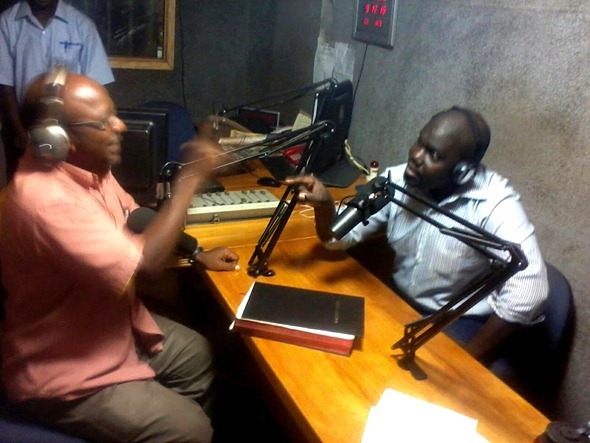
UPDATE: We attempted to record the discussion. The sound is inconsistent in the beginning but it gets better as it progresses. The recorder kept going off so there are breaks in just a few places, and it ends rather abruptly. That said, it is a fairly good recording – it sounds surprisingly much better than I thought it would, considering I recorded it using just my cellphone’s in-built recorder. Download.
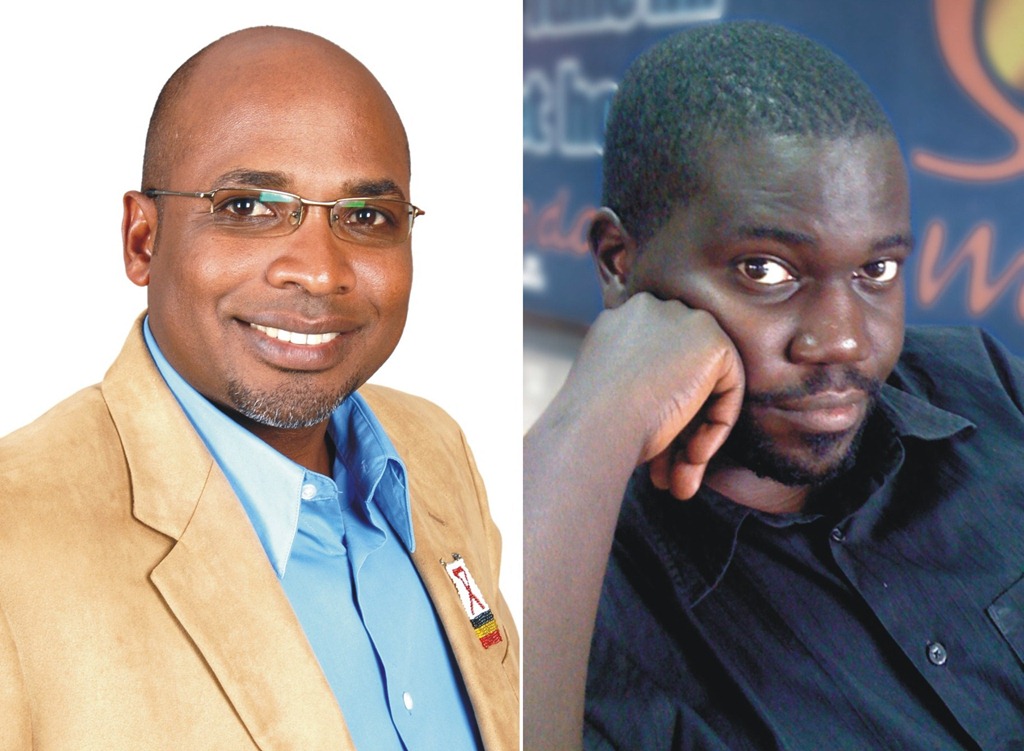








 Freethought Kampala
Recent Comments